 2026-10-14
Amid the growing global shift toward renewable energy sources, microgrids are emerging as one of the most promising solutions for expanding electricity access, particularly in remote areas and communities underserved by traditional national grids.
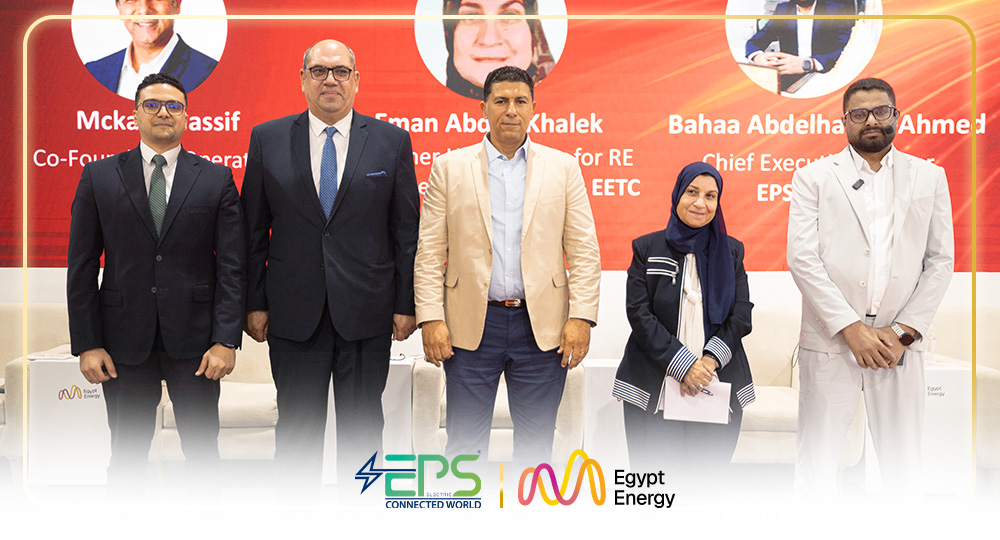
In this context, a panel discussion titled "The Importance of Renewable Energy-Based Microgrids for Egypt, Africa, and Neighboring Countries" addressed the strategic adoption of renewable energy-powered microgrids, highlighting their vital role in enhancing energy security and driving sustainable development across Egypt, Africa, and neighboring regions.
Among a distinguished panel of renewable energy specialists, Eng. Bahaa Abdelhamid, CEO of EPS, delivered key insights reflecting the critical role of private sector leadership in shaping sustainable energy solutions and tailoring them to meet the evolving demands of the Egyptian market and regional sustainability goals.
Providing reliable electricity to off-grid communities and underserved regions remains one of the primary challenges that microgrids are uniquely equipped to solve.
These localized grids enable the seamless integration of renewable energy sources with battery storage systems, delivering tailored electricity solutions aligned with local demand and existing infrastructure. Microgrids can be engineered to operate either as autonomous off-grid systems or fully integrated alongside national power grids, depending on operational requirements and resource availability.
Consequently, the impact of microgrid technology extends beyond basic power supply; it actively stimulates local economies, empowers essential public services, and fosters long-term development in areas lacking stable grid infrastructure.
The session highlighted the core technical parameters involved in designing and integrating microgrids into national grids, identifying technical compatibility as a foundational requirement for long-term operational efficiency and sustainability.
Developing high-performance microgrid systems necessitates rigorous load profiling, optimal generation and storage capacity sizing, and absolute technical alignment between system components and existing infrastructure.
Because execution requirements vary significantly across different industrial, commercial, and residential applications, precise technical planning and component selection remain essential factors in the success of any microgrid deployment.
Given the diverse energy demands across African markets, regional collaboration plays a crucial role in knowledge transfer and the development of adaptable execution models.
In this context, strategic cooperation between Egypt, African nations, and neighboring countries offers an invaluable framework for sharing technical expertise, evaluating pilot project outcomes, and expanding the commercial deployment of microgrid solutions.
Furthermore, cross-border engagement among key institutions helps identify common operational challenges, paving the way for scalable energy solutions tailored to local communities' needs and financial capacities.
The widespread adoption of microgrids relies not only on technical capabilities but also on the availability of structured financing mechanisms, clear regulatory frameworks, and robust public-private partnerships (PPP).
These institutional enablers are essential to de-risking investments in renewable energy, fostering an environment conducive to project execution, and scaling regional deployment.
Moreover, practical implementation experiences across Egypt and similar African markets provide critical benchmarks regarding operations, regulatory approval, and project financing, enabling the industry to build more resilient, locally adapted, and future-proof deployment models.
The session was moderated by Mohamed Attia, Operations Engineer at the Egyptian Refining Company (ERC), and featured a panel of leading experts in renewable energy, energy efficiency, and project development, including:
Eng. Bahaa Abdelhamid — CEO of EPS
Dr. Maged Mahmoud — Acting Executive Director at the Regional Center for Renewable Energy and Energy Efficiency (RCREEE)
Makary Nassif — Co-Founder and COO of INOVATREK
Eman Abdel Khalek — Former Head of the Private Sector Renewable Energy Projects Sector at the Egyptian Electricity Transmission Company (EETC)
The discussions comprehensively covered the role of microgrids in accelerating electrification, technical challenges associated with grid integration, opportunities for regional trade and knowledge exchange, and the regulatory and financial conditions needed to sustain market growth.
The panel's insights reinforce that the transition toward sustainable energy involves more than simply diversifying power generation sources it requires building intelligent, flexible distribution mechanisms capable of managing electricity according to community-specific needs.
As renewable generation and energy storage technologies continue to mature, strategic partnerships, knowledge sharing, and supportive regulatory frameworks will remain the cornerstone of unlocking the full potential of microgrids and securing a resilient energy future for Egypt, Africa, and neighboring markets.

 2023-10-29
 2024-11-26
 2025-10-14


